
Materials
What materials is biodegradable food packaging made of?
Which materials go into paper food packaging, what sugarcane fiber contributes, and how finishes change with grease, moisture, and heat.
Plant fiber as the starting point
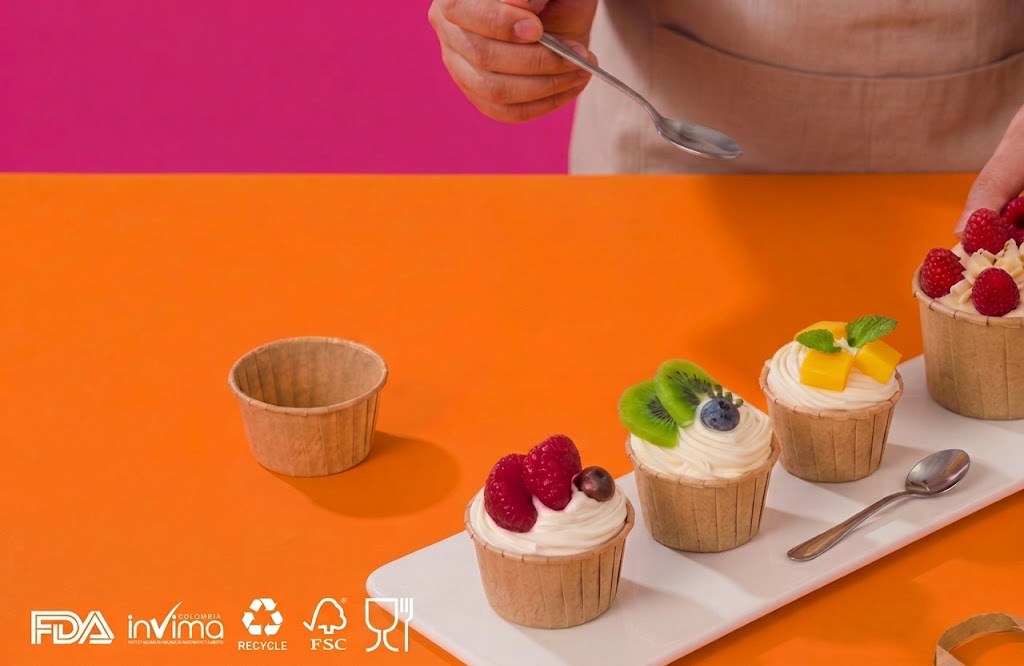
Sugarcane fiber is turned into high-density paper or kraft board. It is the base of cupcake liners, molds, papers, doilies, and containers.
A plant-fiber origin does not describe behavior on its own: two references with the same fiber can respond differently to the oven or to grease depending on the finish.
What defines each reference's performance
Before comparing materials, look at the variables that change results in the operation.
- Basis weight and paper density.
- MG finish and non-stick treatments.
- Barriers against grease and moisture.
- Heat suitability declared in the technical data sheet.
- Inks and customization when the packaging is printed.
How to ask for the right information
Request the reference's technical data sheet and compare it with your process: temperature, baking time, grease and moisture, contact type, and sales channel.
ArtePack manufactures in Colombia and defines the reference together with the customer from that data, without claiming unverified properties.
Frequently asked questions
What is sugarcane fiber paper?
Paper made wholly or partly from the plant fiber left after processing sugarcane; it is the base of high-density papers and board.
Is all paper packaging oven-safe?
No. Only references treated for heat resistance; the maximum temperature and exposure time appear in the technical data sheet.
Which materials does ArtePack use?
High-density sugarcane-fiber paper and kraft board, with finishes selected for grease, moisture, heat, and contact type.
Need help choosing the right material?
Tell us about your food, process, and presentation. Our team will help evaluate a solution.
Request a quote